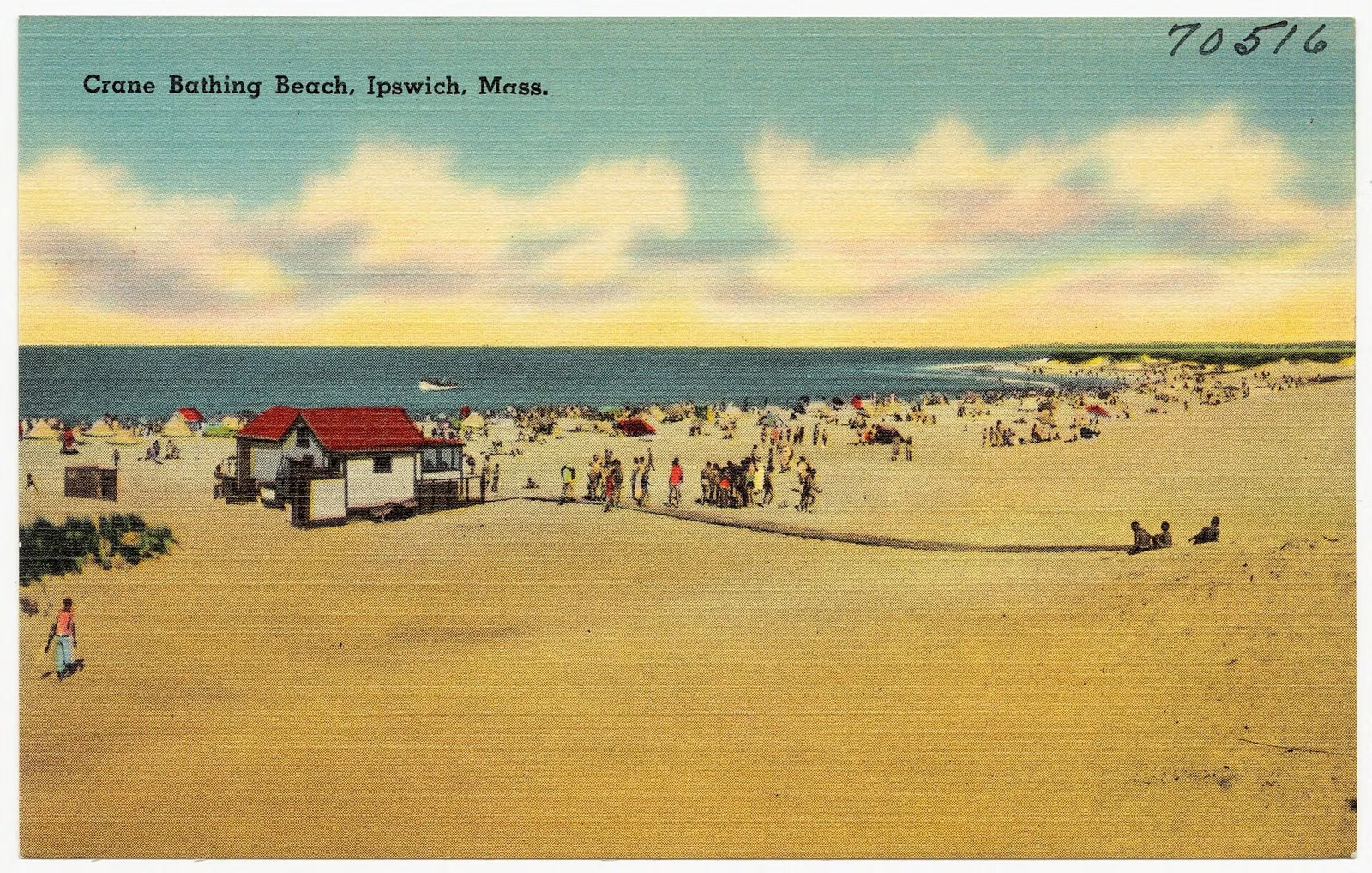
Crane Estate History
The Crane Estate began in 1910, when Chicago industrialist Richard T. Crane Jr. and his wife Florence bought 800 acres on and around Castle Hill in Ipswich, and grew to 3,500 acres. The family gave it to The Trustees of Reservations in stages between the 1940s and the 1970s. Today The Trustees care for 2,100 acres of it: Castle Hill, Crane Beach and the Crane Wildlife Refuge.
Crane Beach alone draws more than 350,000 visitors a year, and The Trustees call it a national model for balancing wildlife protection with heavy public use.
Key Dates
Before the Cranes
For centuries, The Trustees say, this coast was seasonal fishing ground for indigenous people, who called the area Agawam, "place beyond the marsh." The Agawam kept semi-permanent farming villages around the islands of what's now the refuge and harvested shellfish there in warm months. Their sagamore, Masconomet, allied with the English settlers of Ipswich in 1632, and the hill at the edge of the sea came to be called Castle Hill, though no castle ever stood on it.
European settlement turned the land to farming. In the 1700s and 1800s Choate Island and Long Island, joined by a causeway, were a farming community; the Choate House (about 1725 to 1740) and the Proctor Barn (about 1778) survive. By the late 1800s Castle Hill was a gentleman's farm under J.B. Brown, who rebuilt its farmhouse into the shingle-style cottage that's now the Inn at Castle Hill.
The Cranes' Summer Estate
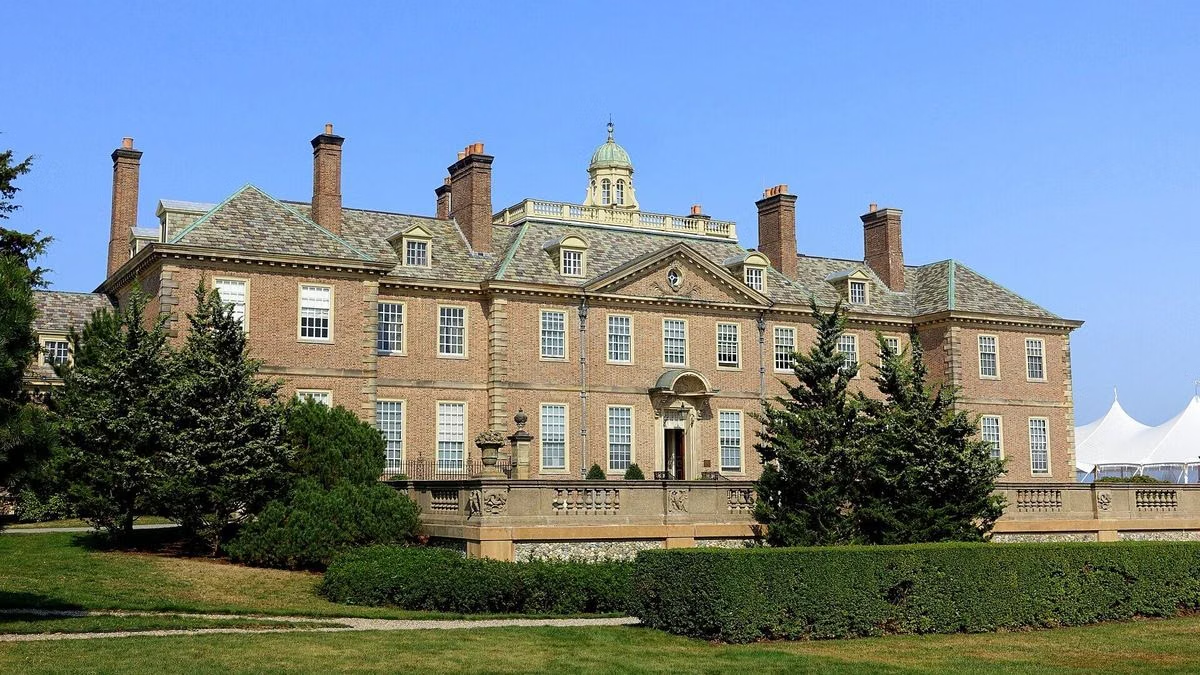
Richard Teller Crane Jr. was heir to Crane Co. of Chicago, the company behind Crane plumbing. He and Florence Higinbotham Crane bought the property in 1910 and, with architects, landscape architects and artists, turned it into one of the country's great Country Place Era estates. It had a mansion, a working farm and estate buildings, a pool complex, designed gardens and wide natural areas, and the family kept adding land until it reached 3,500 acres.
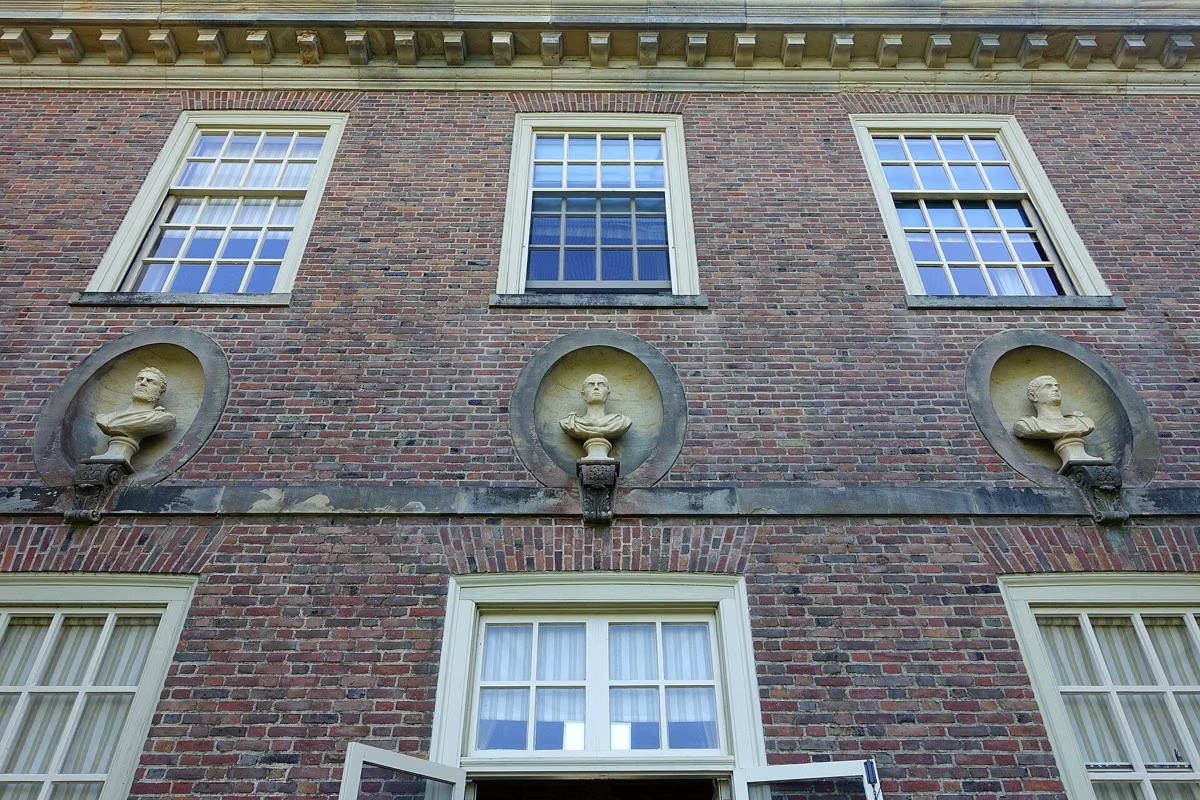
Their first house was an Italian Renaissance Revival villa by Shepley, Rutan and Coolidge, with grounds by the Olmsted Brothers and Arthur Shurcliff. The Cranes tore it down in 1924 and replaced it with the Great House, a 59-room mansion by Chicago architect David Adler, modeled on 17th-century English country houses and finished in 1928. See Castle Hill for what you can visit.
The Gift to The Trustees
In 1910, the same year they bought the land, the Cranes changed their wills so the property would one day go to The Trustees. It went in stages:
- After Richard Crane Jr. died in 1945, the family gave 1,000 acres, most of Crane Beach and the Castle Neck dunes.
- When Florence Crane died in 1949, her bequest added 350 acres, the Great House and most of Castle Hill.
- About 25 years later, their daughter-in-law Miné S. Crane added the Crane Wildlife Refuge (see Choate Island).
- Other donors gave more land around Castle Hill between 1980 and 1982.
Castle Hill was named a National Historic Landmark in 1998. The Trustees' archives in Sharon hold the Castle Hill Collection, 41 linear feet of records on the Crane family, the Crane Company and the estate from 1832 to 2007.
Crane Beach and the Piping Plover
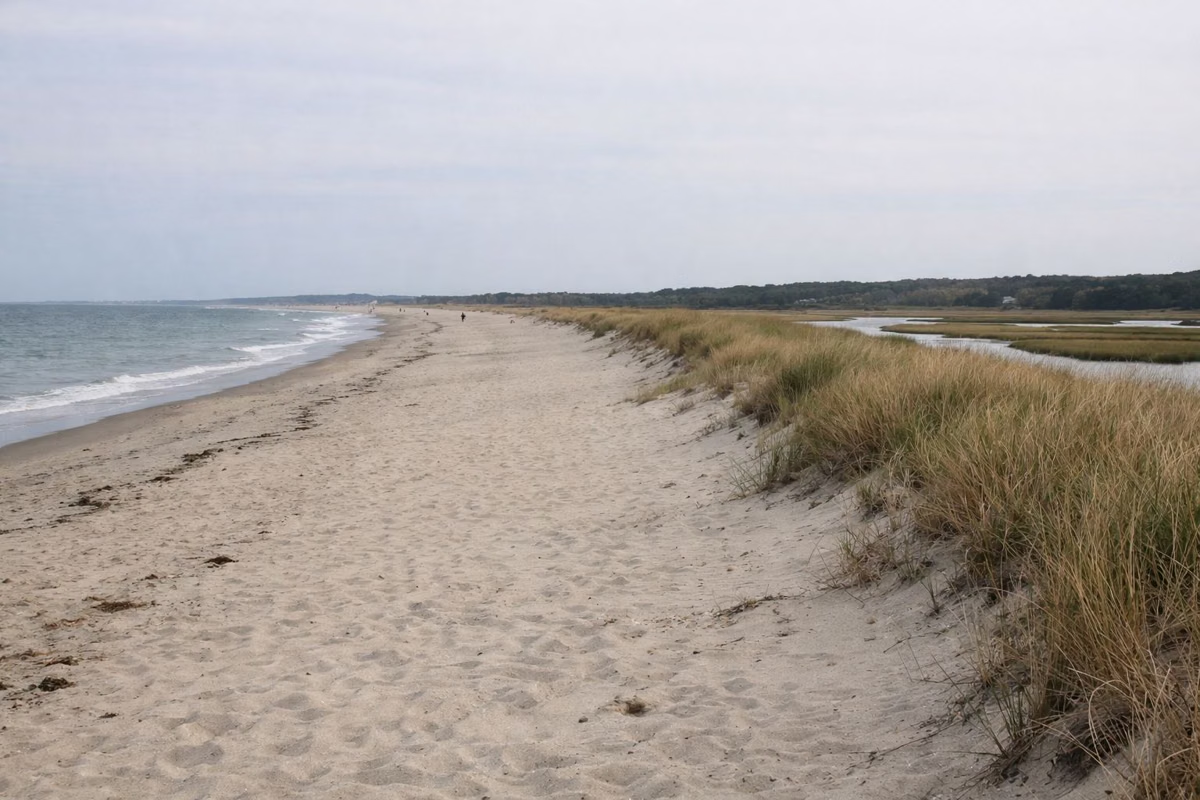
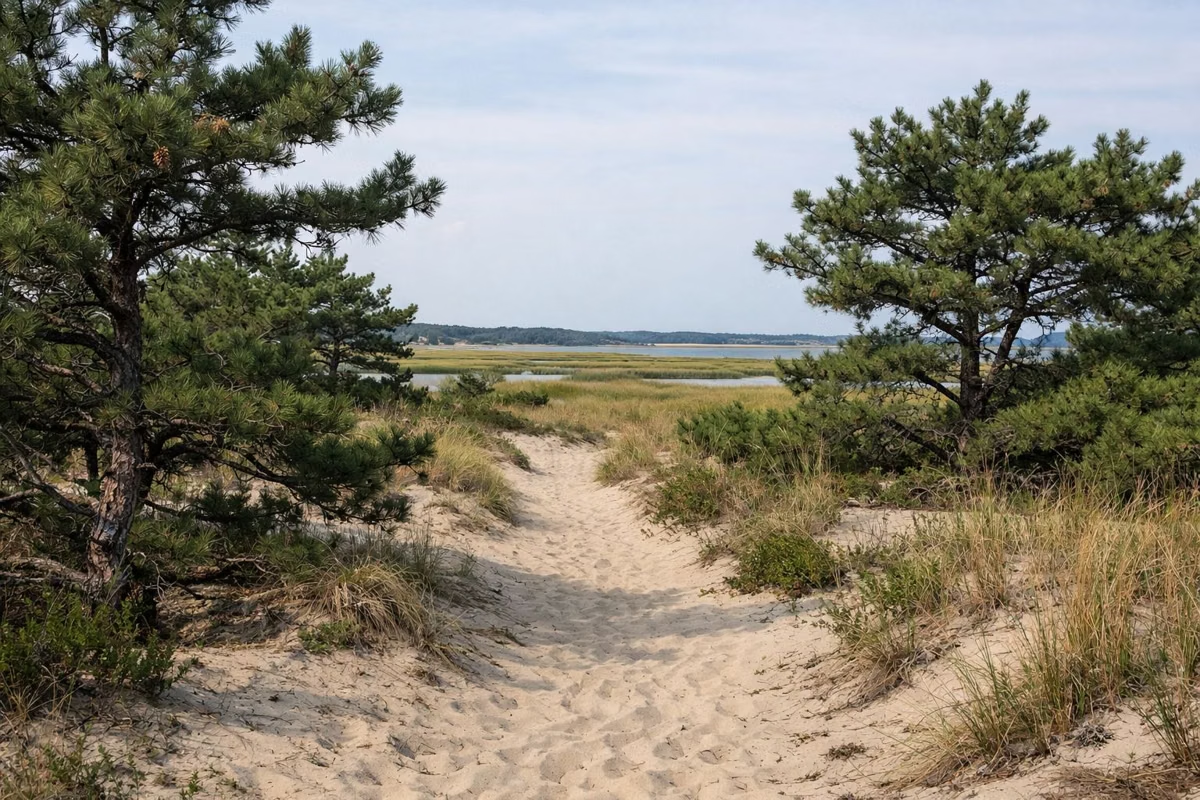
Crane Beach is 1,234 acres of beachfront, dunes and maritime forest, with about four miles of Atlantic-facing sand. The Trustees count it among the world's most important nesting sites for the piping plover, a threatened bird that was nearly hunted out in the 1800s for its eggs and feathers, and say its shorebird program has won national recognition. That's why parts of the beach are fenced off for nesting birds.
The Ada K. Damon Shipwreck
On Steep Hill Beach, at the estate's edge, lie the remains of the schooner Ada K. Damon. Ebenezer Burnham built her in Essex in 1875 as a two-masted fishing schooner. Converted to haul sand in 1909, she was driven ashore on Steep Hill Beach on December 26, on her first sand-hauling trip to Plum Island, after her anchor chain parted in a storm. She was abandoned as a total loss.
The Trustees have photos of children playing on the wreck at the first Crane Beach Picnic in 1911. Hurricane Teddy and autumn king tides broke up the hull in 2020, and in February 2024 shifting sand uncovered a roughly 50-foot section. The Massachusetts Board of Underwater Archaeological Resources and The Trustees monitor it together; disturbing the wreck or taking pieces from it is illegal without the board's permission.
Hollywood on the Hill
The estate has been a film set for decades, with The Witches of Eastwick (1987), Ghosts of Girlfriends Past (2009), The Equalizer (2014) and Little Women (2019) among the movies shot at Castle Hill.
Crane Estate History FAQ
Who owned the Crane Estate?
Richard T. Crane Jr., heir to Crane Co. of Chicago, and his wife Florence bought it in 1910. The family gave it to The Trustees of Reservations in stages after 1945.
When was the Great House built?
From 1924 to 1928, to a design by Chicago architect David Adler. It replaced an earlier Italian-style villa on the same hill.
Who runs Crane Beach?
The Trustees of Reservations, which looks after 2,100 acres of the original Crane Estate: Crane Beach, Castle Hill and the Crane Wildlife Refuge.
Is there a shipwreck at Crane Beach?
Yes. The schooner Ada K. Damon was driven ashore on Steep Hill Beach on December 26, on its first sand-hauling trip after its 1909 conversion. Part of its hull resurfaced in 2024.