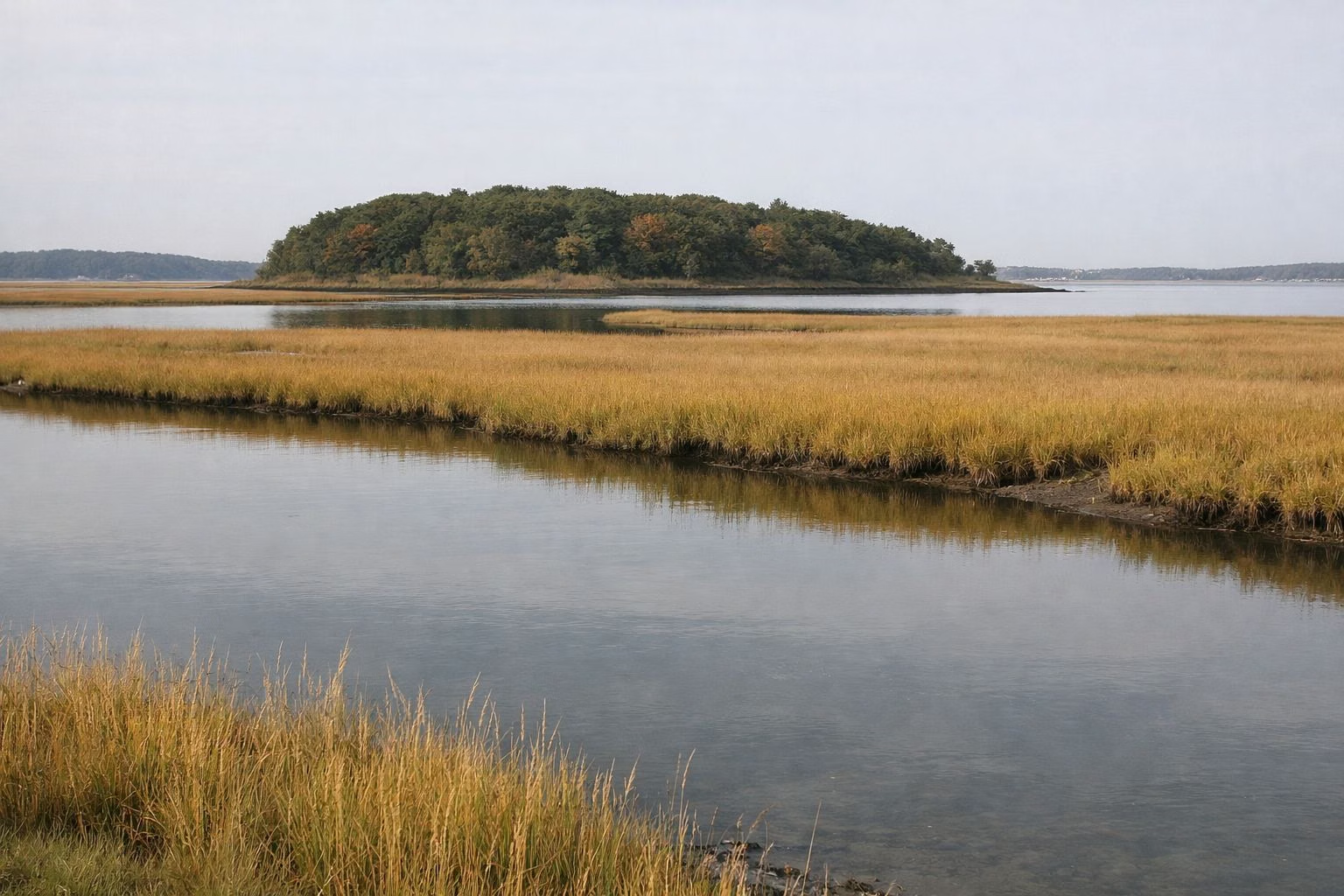
Choate Island & the Crane Wildlife Refuge
Choate Island is the largest of the seven islands in the Crane Wildlife Refuge, in the Essex River estuary behind Crane Beach, and you can only get there by boat: your own boat or kayak landing at the Long Island dock, or a guided trip run by The Trustees. The refuge is open daily, 8 a.m. to 4 p.m., year-round, and The Trustees suggest allowing at least two hours.
Choate Island covers 135 acres of fields, spruce forest and shore, with the Choate House from about 1725 to 1740 and the Crane family burial site at its top. The whole refuge is 697 acres.
The Refuge at a Glance
What the Refuge Is
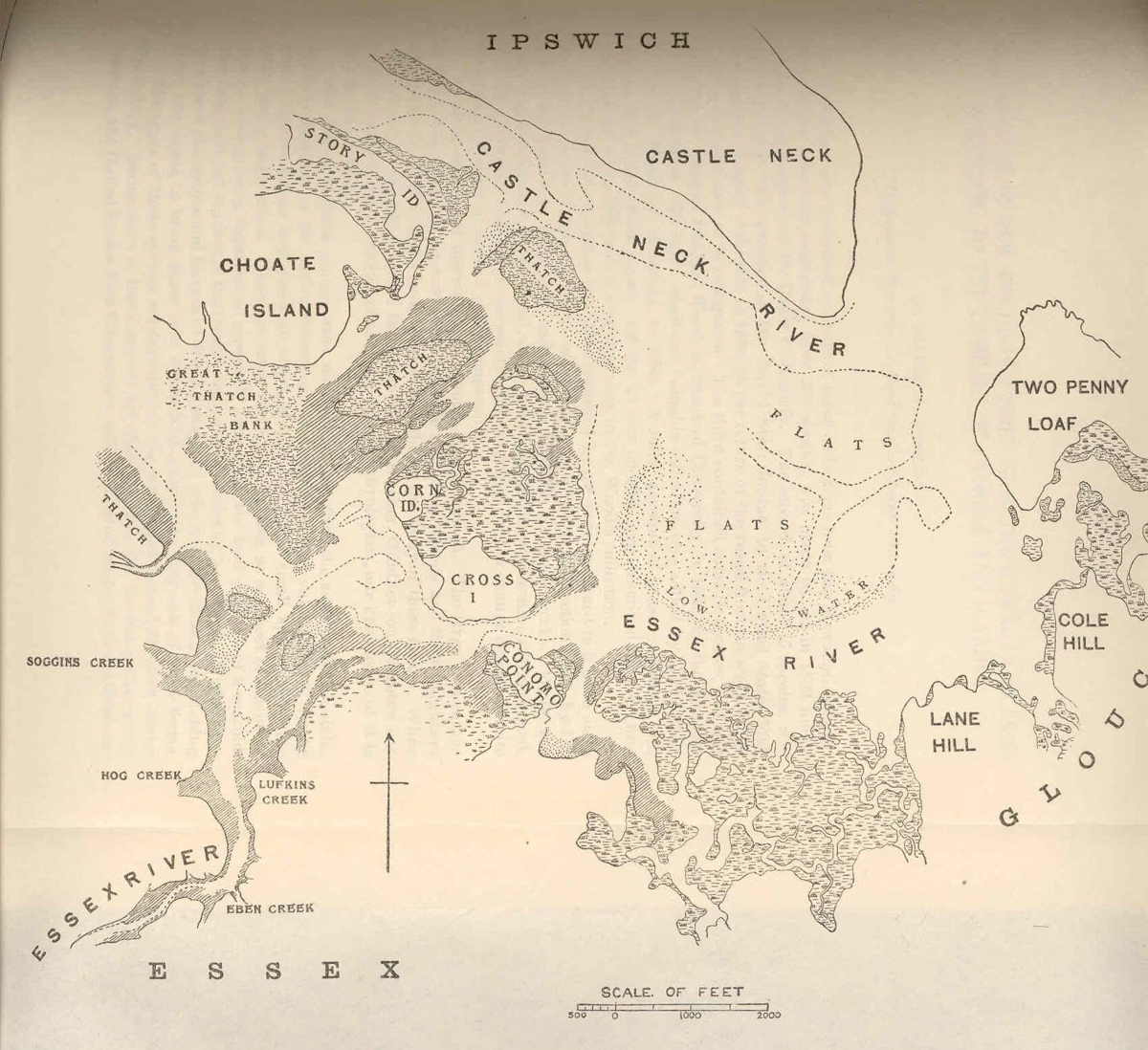
The Crane Wildlife Refuge is a patchwork of salt marsh, tidal flats, part of Castle Neck and seven islands in the Essex River estuary: Choate, Long, Dean, Dilly, Pine, Patterson and Round. It was part of the Crane family's summer estate, and Miné S. Crane, Richard and Florence's daughter-in-law, gave it to The Trustees about a quarter-century after Castle Hill came to them. Today it's the third piece of the Crane Estate, with Castle Hill and Crane Beach.
More than 200 bird species have been seen in the refuge, and several rare plants and animals live there.
Choate Island
Choate Island, once called Hog Island, is the biggest island in the refuge. Deer, fisher, coyote and otter live there. A spruce forest planted in the early 1900s draws golden-crowned kinglets and sharp-shinned hawks, and the grasslands are habitat for bobolinks and Savannah sparrows. Gulls, sanderlings and sandpipers feed along the shore.
People lived and worked here long before the Cranes. The Trustees say the Agawam had semi-permanent farming villages in the area and harvested shellfish around the islands in warm months. In the 1700s and 1800s, Choate Island and Long Island, joined by a causeway, were a farming community. Two buildings from that time still stand: the Choate House, from about 1725 to 1740, and the Proctor Barn on Long Island, from about 1778.
What You Walk
From the Long Island dock, about three and a half miles of gravel roads and mown footpaths lead to the barn on Long Island, past the Choate House and up to the Crane burial site at the top of Choate Island. The paths are gravel and grass and aren't accessible for people with mobility challenges. There are no public restrooms anywhere in the refuge, so plan for that.
Getting There by Your Own Boat or Kayak
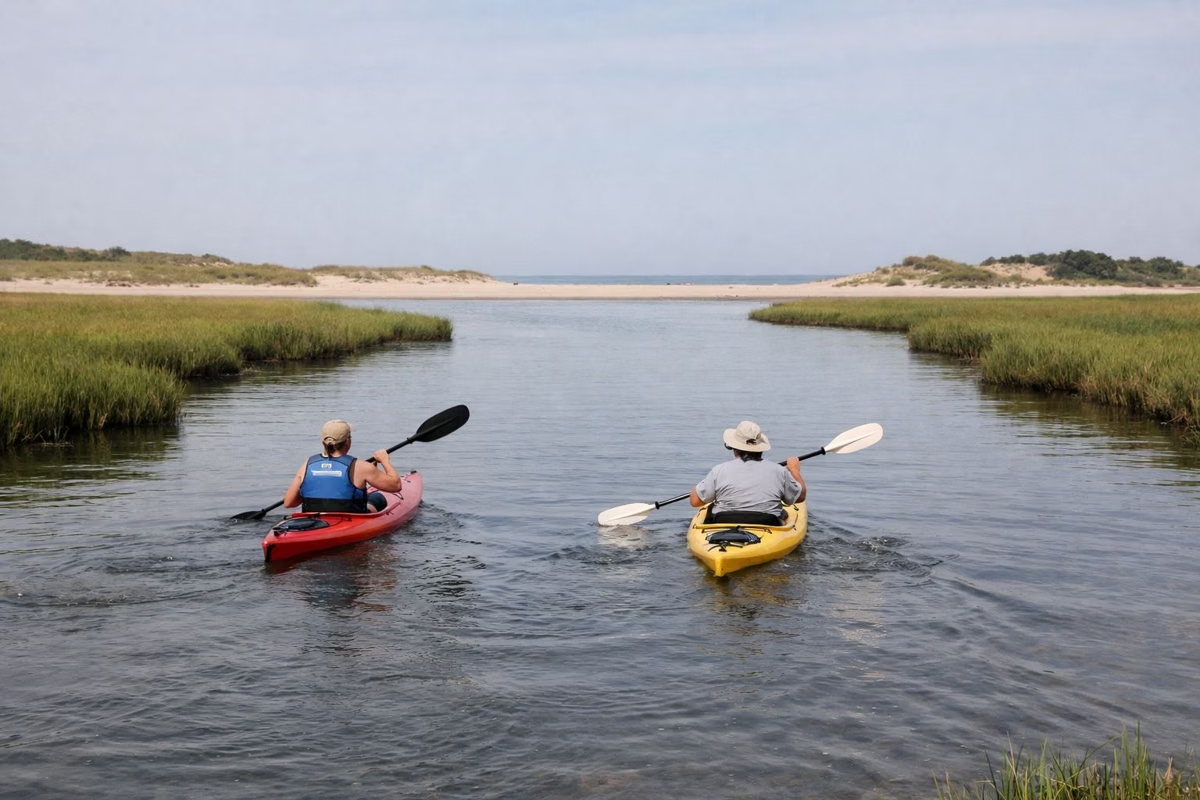
Private boats and kayaks can visit, with strict limits. You can't launch any watercraft from the Crane Estate, so you put in somewhere outside it. Once there, you may land only on or right next to the dock on Long Island:
- Kayaks, canoes and other non-motorized boats haul out right next to the dock.
- Motorboats can tie up on the dock but must leave the front space open for maintenance staff.
- No landing anywhere else on the estate.
Check the tide before you paddle. The refuge sits in a tidal estuary with wide flats at low water (see tides).
Guided Trips
If you don't have a boat, The Trustees' CraneOutdoors program is the way in. Guided kayak trips to Choate Island and around the refuge run from late June through October, and occasional Choate Island hikes run from late May through October. Every program needs pre-registration, online or at the Great House guest services desk. Private guided trips and group tours can be arranged.
Choate Island Day
Once a year in mid-autumn, The Trustees hold Choate Island Day, with family activities, hikes and historic house tours. In 2026 it fell on October 17. Information and tickets come out a few weeks before.
Rules in the Refuge
- No dogs or other pets at any time.
- No camping.
- No kites, balloons or flying lanterns.
- Land only at the Long Island dock.
- Don't disturb nesting birds or other wildlife.
Choate Island FAQ
How do you get to Choate Island?
Only by water: your own boat or kayak landing at the Long Island dock, or a guided CraneOutdoors kayak trip or hike. You can't launch from the Crane Estate itself.
Is Choate Island open to the public?
Yes, daily from 8 a.m. to 4 p.m., year-round, for visitors arriving by private boat or on a Trustees program.
What is on Choate Island?
Fields, a spruce forest, the Choate House from about 1725 to 1740, and the Crane family burial site at the top. The Proctor Barn is on neighboring Long Island.
Are there bathrooms on Choate Island?
No. There are no public restrooms anywhere in the Crane Wildlife Refuge.
Can I bring my dog to Choate Island?
No. Dogs are never allowed in the Crane Wildlife Refuge.